Home / Blog / Tread Rubber & Cushion Gum Storage
CONSUMABLES GUIDETread Rubber and Cushion Gum Storage: The Rules That Actually Protect Bond Quality
The industry's own published temperature thresholds and shelf-life numbers for tread rubber and cushion gum — and why a hot corner of the shop is quietly working against every retread that comes off the line.
Published September 9, 2026 · Good Hope Retreaders
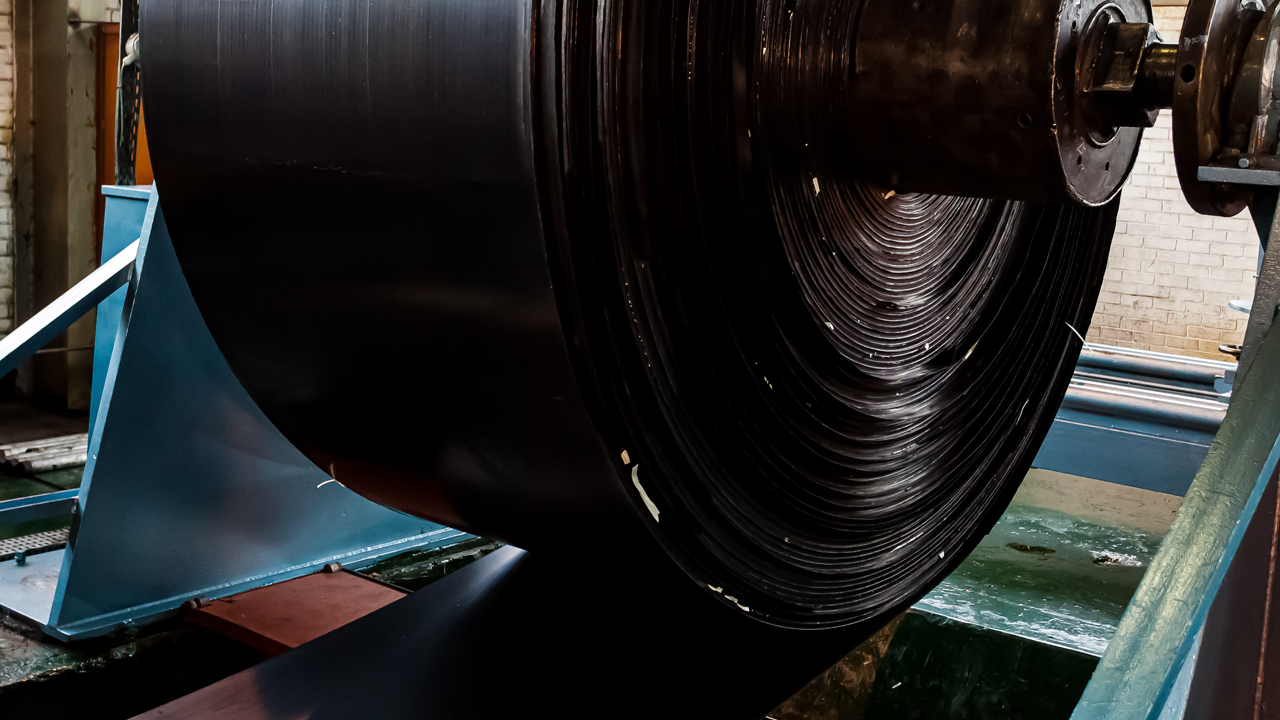
Most of what gets written about retread bond quality focuses on the buffer and the curing chamber — buff texture, cure temperature, vacuum integrity. All of that matters. But it assumes the tread rubber and cushion gum going onto the casing are still in the condition they were in when they left the manufacturer. That assumption isn't automatic. Uncured rubber compounds are living materials, and how they're stored between delivery and use has a real, published effect on how well they'll bond.
The Tire Industry Association's own guidance on this is specific enough to act on — not vague "store it somewhere cool" advice, but actual temperature thresholds and shelf-life numbers a shop can plan around.
The baseline: dry, dark, and below 80°F
The Tread Rubber and Tire Repair Materials Manufacturers' Group (TRMG) — the segment of the Tire Industry Association that represents the manufacturers of the materials retreaders actually use — publishes a straightforward storage standard: tread rubber and repair materials should be kept in a dry place, protected from the elements and direct sunlight, with the storage area held below 80°F. Under those conditions, TRMG's guidance says the materials can be expected to stay in satisfactory condition for six months from the date they're received from the manufacturer.
Six months isn't a hard expiry — it's the baseline under correct storage. Get the storage conditions wrong, and that window shrinks fast.
What heat actually does to the clock
TRMG's guidance quantifies the temperature relationship directly, and it's steeper than most shops probably assume:
| Storage temperature | Effect on shelf life |
|---|---|
| Below 80°F, dry, out of sunlight | Full ~6-month baseline |
| Colder than the baseline | Shelf life extends, without harm to the product |
| 80°F – 95°F | Shelf life reduced by roughly 25% |
| 95°F – 110°F | Shelf life reduced by roughly 50% or more |
A closed storage room, a spot near a heat source, or a delivery that sits on a loading dock through a summer afternoon can push material well into that 80–95°F band without anyone noticing. TRMG's numbers say that's not a cosmetic issue — it's a material one, and it moves the clock on when that stock stops being fit to build a reliable bond.
Cushion gum can run tighter than the general baseline
The TRMG figures above are general guidance for tread rubber and repair materials as a category. Individual manufacturers publish their own shelf-life specs for specific products, and they don't all match the general baseline. REMA TIP TOP publishes a 4-month shelf life from date of manufacture for its OTR retread precure cushion gum — noticeably tighter than the 6-month general figure. Other manufacturers publish tighter windows still: Patch Rubber Co. lists some precure cushion gum products at a 3-month shelf life.
The practical takeaway is simple: the general TRMG guidance is a floor for how to store the material correctly, not a substitute for checking the specific manufacturer's datasheet for what you're actually running. Cushion gum in particular — the layer doing the actual bonding between casing and tread — is worth checking product-by-product rather than assuming the six-month number applies across the board.
What this means for how a shop buys and stores
- Date everything on arrival. Shelf life is measured from receipt (TRMG) or manufacture (individual product specs) — a shop that isn't tracking dates has no way to know which stock is still inside its window.
- Rotate stock — first in, first out. The oldest dated material should be the first pulled for the next build, not whatever's easiest to reach on the shelf.
- Treat storage location as a quality control point, not a logistics afterthought. A dry, shaded, temperature-controlled storage area isn't overhead — per TRMG's own numbers, it's the difference between a full six-month window and losing a quarter to half of it.
- Don't over-buy to chase a bulk discount if it means the stock sits past its window. Material that ages out before it's used isn't a saving — it's tread rubber and cushion gum a shop paid for and then had to treat as scrap or accept as a bond-quality risk.
None of this replaces good buffing, building, and curing practice — it happens before any of that. But a bond built with degraded cushion gum is starting from a worse position no matter how well the rest of the process runs. Storage discipline is the cheapest quality control step in the whole line, and it's also one of the easiest to overlook.
Where Good Hope fits
We supply cushion gum and precured tread rubber from our Ontario warehouse with transparent all-in Canadian pricing, and because we stock locally, shops don't have to over-order to buffer against a long cross-border lead time — one of the easiest ways stock ends up sitting past its window in the first place. This pairs with our guides on curing envelope vacuum integrity and buffing and rasping for bond quality — the steps that come right after storage in determining whether a retread bonds properly.
RELATED GUIDES
Need consumables on a schedule that fits your build volume?
Tell us your monthly build volume and we'll help you size an order that keeps your line running without stock sitting past its window — transparent all-in Canadian pricing, shipped from our Ontario warehouse.
Talk to us about your consumables order →Ask About Cushion Gum & Tread Rubber
Send us your requirements and we'll get back to you within 24 hours with pricing and lead times — no obligation.