Home / Blog / Tread Compound Basics
MATERIALS GUIDEWhat Actually Goes Into a Retread: Tread Compound Basics
Carbon black vs. silica, natural vs. synthetic rubber — what tread compound actually is, why it matters for retread performance, and what to ask a tread rubber supplier.
Published September 2, 2026 · Good Hope Retreaders
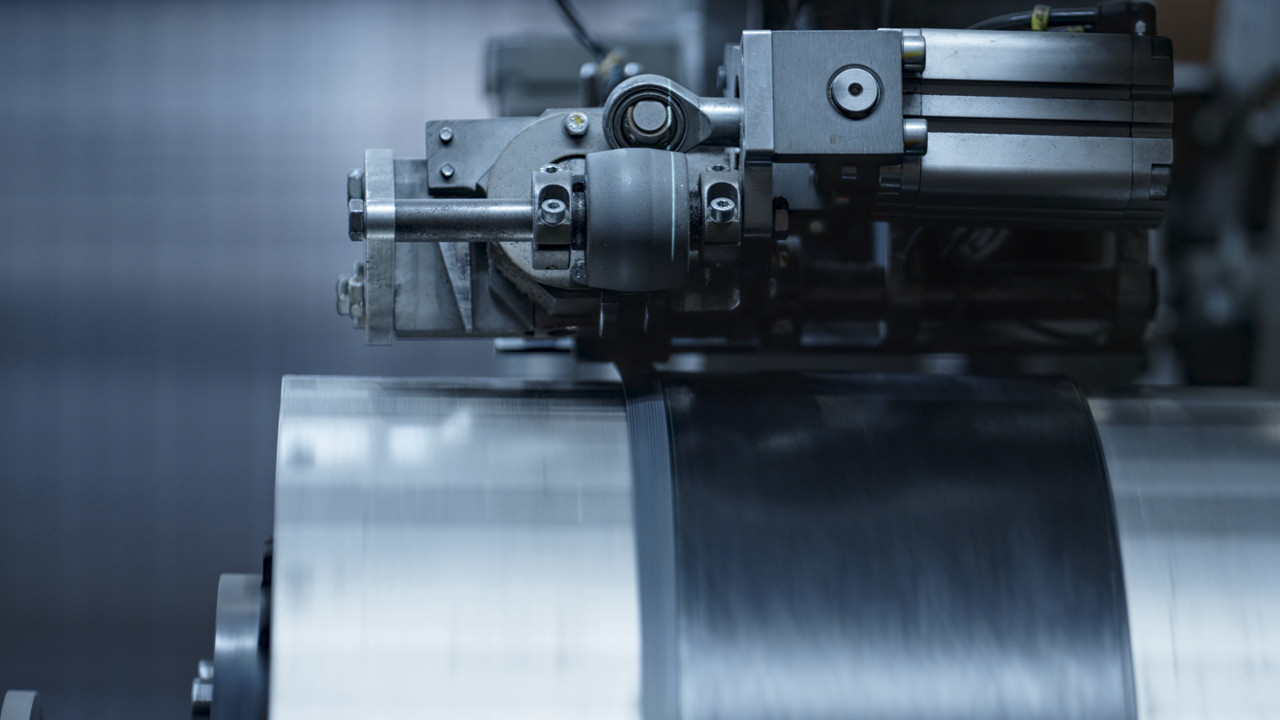
Most retread buying decisions come down to casing quality, buffing accuracy, and cure control. But there's a fourth variable that gets far less attention: what the tread rubber itself is actually made of. Tread compound isn't one material — it's an engineered mix of polymers and reinforcing fillers, and the mix a supplier chooses directly shapes how the finished retread wears, grips, and holds up to heat. Here's what's actually in it, and what it means for the tread you put on a casing.
The polymer base: natural vs. synthetic rubber
Every tread compound starts with a rubber polymer, and the choice depends heavily on the application. Natural rubber has a low-hysteresis value — meaning it flexes and recovers with relatively little energy lost as heat — combined with strong tensile strength driven by strain-induced crystallization. That combination of low heat buildup and durability is why natural rubber has long been the preferred base for truck, bus, and off-road tire tread, where sustained heavy loads and highway speeds generate significant internal heat. Passenger tire tread compounds, by contrast, more commonly blend in synthetic polymers like styrene-butadiene rubber (SBR) and polybutadiene rubber (BR) alongside natural rubber, since passenger-tire duty cycles put less continuous thermal load on the tread.
The reinforcing fillers: carbon black vs. silica
Rubber polymer alone isn't strong enough to survive on the road — it needs reinforcing filler mixed in, typically making up around 30% of the compound's weight. Two fillers dominate:
- Carbon black is the traditional reinforcing filler, prized for improving tensile strength, tear strength, abrasion resistance, and skid resistance. It's why tires are black, and it's still the dominant filler in most commercial truck tread compounds today.
- Silica is the newer alternative, and it solves a problem carbon black can't: improving wet traction and rolling resistance without the wear penalty that normally comes with chasing better grip. Michelin patented the first silica-and-silane "green tire" tread technology in the early 1990s, and it was the first formulation to meaningfully break what the industry calls the "magic triangle" — the standing trade-off between rolling resistance, wet grip, and treadwear, where improving one had always meant sacrificing another.
In practice, most modern tread compounds — including commercial truck tread — use a carbon-black/silica blend, with the ratio tuned to the tire's intended job: more silica for fuel-economy-focused highway tread, more carbon black where raw abrasion resistance and cost matter more than rolling resistance.
Why this matters for retreading specifically
Compound choice matters differently depending on which retreading process you're running:
- Pre-cure (cold process): the tread rubber arrives already cured and molded by the tread manufacturer, compound and all. The shop's decision is which tread supplier and which compound/pattern to buy for a given application — a low-hysteresis, wear-focused compound for long-haul steer and trailer positions, versus a higher-traction compound for regional or vocational drive-axle work.
- Mold-cure (hot process): the shop applies uncured tread rubber — commonly called camelback — and cures the tread pattern into it inside the mold. Here, compound and cure parameters are both in the shop's hands, which is why sourcing a consistent, correctly formulated camelback tread rubber matters as much as the mold itself.
Either way, undertread gauge is part of the same heat-management picture as compound selection: retreaders typically leave 3/32"–5/32" of undertread rubber between the new tread and the casing, calibrated so the tire won't build up excess heat under normal driving conditions. A well-chosen compound and correct undertread gauge work together — one doesn't compensate for the other.
What to ask a tread rubber supplier
- What's the polymer base? Natural-rubber-heavy compounds suit sustained highway heat; blended compounds may trade some heat resistance for cost or specific traction characteristics.
- What's the filler system? A carbon-black/silica blend built for wet grip and rolling resistance is a different product than a straight carbon-black compound built for abrasion resistance — match it to the application, not just the price.
- Is it consistent, batch to batch? For mold-cure shops applying their own camelback, compound consistency directly affects cure repeatability and bond quality — this is a quality-control question worth asking directly, not assuming.
This pairs with our guide to pre-cure vs. mold-cure retreading for the process-level decision, and buffing and rasping for the casing-prep side of bond quality.
RELATED GUIDES
Sourcing tread rubber for your line?
We supply pre-shaped, uncured tread rubber for hot-process retreading lines, with transparent all-in Canadian pricing and delivery from our Ontario warehouse. Tell us your casing sizes and pattern needs and we'll help you spec the right compound.
Get a tread rubber quote →Ask About Tread Rubber
Send us your requirements and we'll get back to you within 24 hours with pricing and lead times — no obligation.