Home / Blog / Tire Building & Stitching
PROCESS GUIDETire Building & Stitching: How the Tread Actually Gets Bonded to the Casing
Buffing preps the surface and curing sets the bond permanently — but the step in between, building and stitching, is where a retread's fate is mostly decided. Here's what actually happens on the tire builder.
Published September 10, 2026 · Good Hope Retreaders
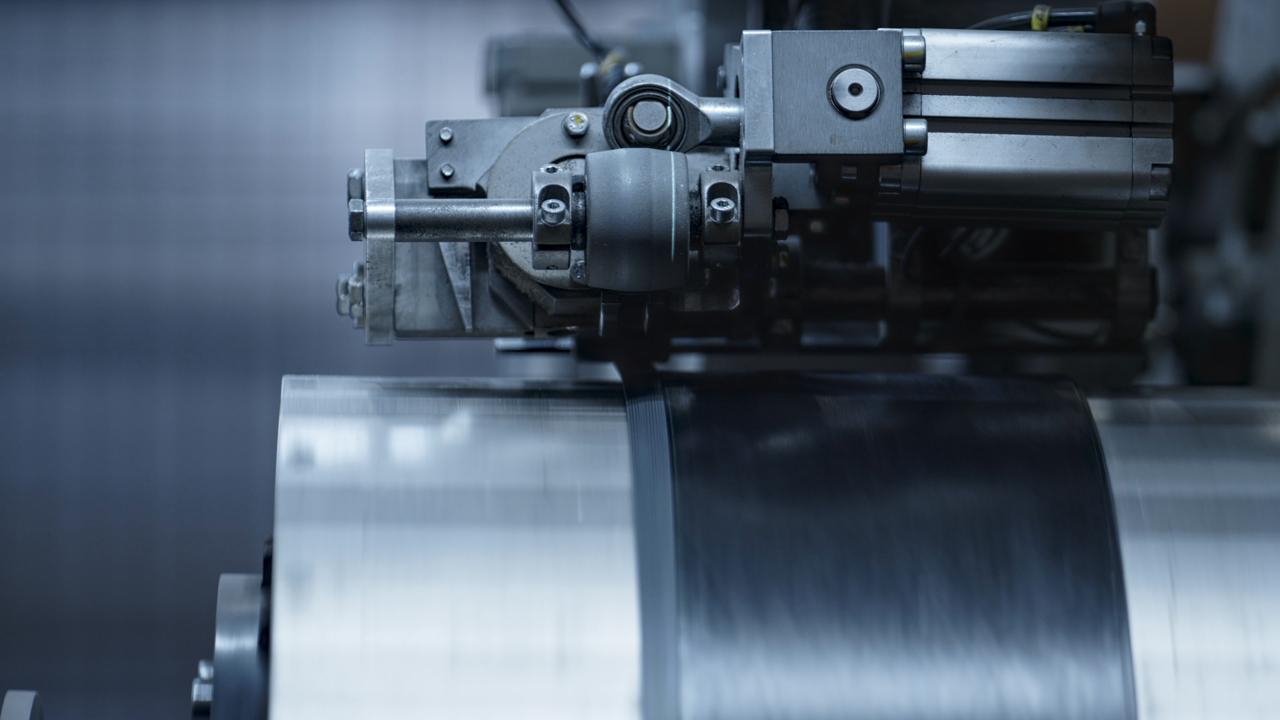
Most explanations of retreading jump straight from "buff the casing" to "cure the tire." That skips the station that actually joins the two: the tire builder, where cushion gum and precured tread are applied to the buffed casing and rolled down under pressure before the assembly ever sees an envelope or a curing chamber. It's a quieter step than buffing or curing, but it's where a weak bond or a bad splice gets built in — long before the chamber has a chance to hide or fix it.
Where building fits in the process
TRIB (the Tire Retread & Repair Information Bureau) and TIA lay out the core precure sequence: inspection, buffing to remove the old tread and true up the casing, skiving to repair any damage the buffing exposes, then applying the bonding layer and new tread, and finally curing under heat and pressure. Building sits right after buffing and rasping and any skive repairs, and right before the casing goes into a curing envelope.
On the builder, the casing is mounted on an expandable hub or rim and rotated. Cushion gum — the layer of uncured bonding rubber — goes down first, either applied directly to the buffed casing or backed onto the tread strip, per the retreading process descriptions on file with the U.S. Patent and Trademark Office (e.g. U.S. Patent 5,447,587, "Method for applying hot cushion gum to a tire carcass," and U.S. Patent 5,458,727, on direct-extrusion cushion-gumming and skive-filling). Then the precured tread band — already vulcanized, with its final pattern — is unwound onto the casing as it rotates.
What "stitching" actually means
"Stitch" isn't marketing language — it's the industry's technical term, and it has a precise meaning. Per U.S. Patent 4,004,961 ("Stitching apparatus for stitching tire components on a building drum"), stitching refers specifically to the expulsion of air trapped between a layer of rubber and the surface underneath it — in this case, between the new tread and the casing. It's done with rollers, run across the assembly as it rotates, ranging from small hand-held stitching rollers up to large powered rollers sized for truck and bus tires.
That air matters more than it sounds like it should. Any pocket of trapped air left between the tread and the casing at this stage doesn't go away in the curing chamber — it becomes a void in the cured bond, a starting point for a separation once the tire is back in service. Consistent, complete stitching is what keeps that from happening, which is why the same builders that apply the tread also carry the stitching wheels as standard equipment, not an optional add-on.
The splice: where the tread ends meet
Precured tread comes off a builder as a straight strip, so it has to be joined into a loop around the casing. The standard method, described in tire-retreading patent literature going back to systems like U.S. Patent 4,075,047 (Bandag's tire retreading system) and refined in later patents on circumferential tread application (U.S. 4,234,371; U.S. 6,758,931), is a butt splice: the casing is rotated until enough tread has unwound, the tread is cut transversely, and the cut end is butted directly against the leading edge to close the loop.
A clean, tight butt splice is nearly invisible once the tire is on the road. A sloppy one — a gap, an overlap, or a splice that didn't get stitched down as firmly as the rest of the tread — is a localized weak point that can show up later as a lifted edge or a splice separation. It's a small detail on a big machine, but it's exactly the kind of detail that separates a shop that treats building as a formality from one that treats it as the load-bearing step it is.
Why this step gets less attention than it deserves
Buffing gets attention because it's loud and visibly removes material. Curing gets attention because it's where the bond technically forms, and because chamber choice is a real capital decision. Building sits in between, doing less visible work — which is exactly why it's the step most likely to get rushed on a busy day. A rushed stitch pass or an inattentive splice doesn't fail today. It fails eight months and forty thousand kilometres later, and by then it looks like a curing problem or a casing problem, not a building-station problem.
That's also why building belongs in the same conversation as buffing and casing prep when a shop is troubleshooting bond failures. If separations keep showing up at a consistent location around the tire's circumference rather than randomly, the splice — and the stitching around it — is usually the first place to look, ahead of curing time or temperature.
RELATED GUIDES
Equipping the building station
We supply the tire builder and expandable hub that make up a precure building station, alongside the cushion gum and camelback tread rubber it runs. Transparent all-in Canadian pricing, delivered from our Ontario warehouse — tell us your casing sizes and volume and we'll spec the right setup.
Get a building-station quote →Ask About the Tire Builder
Send us your requirements and we'll get back to you within 24 hours with pricing and lead times — no obligation.