Home / Blog / Skive Repair Tools Compared
TOOL GUIDESkive Repair Tools Compared: Carbide Cutters, Rotary Gouges, and White Oxide Stones
Three tools that live on the same repair tray, run at wildly different speeds, and do genuinely different jobs on an injury. Here's what each one is actually for.
Published September 13, 2026 · Good Hope Retreaders
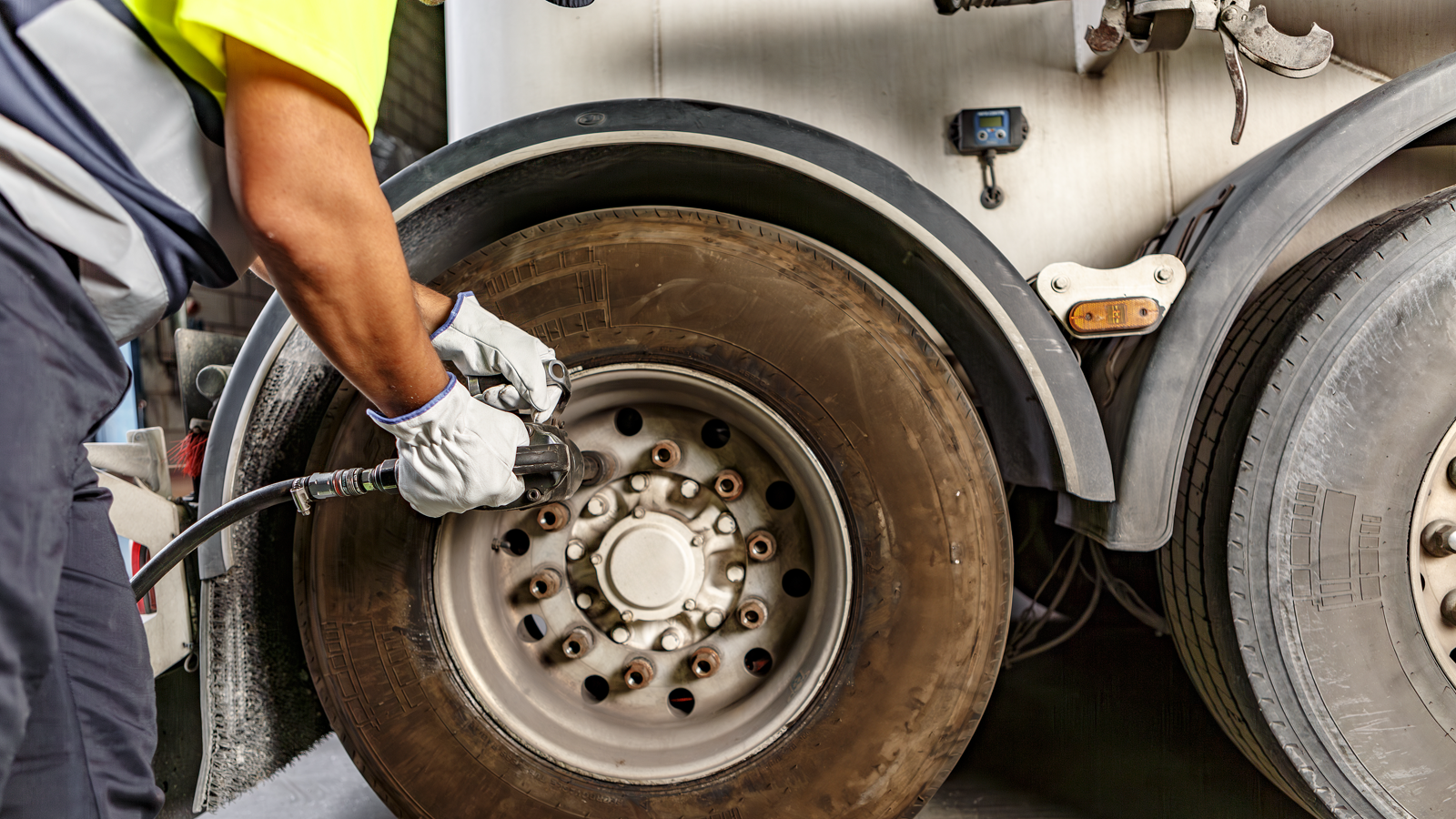
Our skiving guide covers what skiving is and which injuries qualify for repair; our buffing and rasping guide covers the bond-quality standard for the casing as a whole. This one is narrower: it's about the specific rotary tools sitting on the tray at a skiving station — carbide cutters, rotary gouges, and white oxide stones. They look similar, they're often reached for on the same repair, and they get confused for one another constantly. They shouldn't be. Each does a distinct job, each is meant to run at a very different speed, and using the wrong one — or running the right one too fast — either scorches rubber, chews into sound casing, or leaves a repair bonded to steel wire that was never properly dressed.
The order they actually get used in
A typical injury with damaged steel belt cable moves through these tools in sequence, not interchangeably: a rotary gouge clears the bulk of loose or torn rubber first, a carbide cutter follows if there's compromised steel cord to cut back, and white oxide stones dress that exposed steel cord once it's cut — three different materials being worked (loose rubber, embedded steel, exposed steel), three different tools, three different speeds.
Rotary gouges: bulk removal, first pass
A rotary gouge's job is speed: clear a large volume of loose or damaged rubber out of an injury fast, so a technician isn't hand-cutting it out with a knife before the real repair work can start. Tire Review's own back-to-basics repair walkthrough describes exactly this — a rotary gouge is run on a low-speed buffer, with a maximum of 5,000 RPM, to remove rubber around the injury before the repair itself begins. Gouge heads come in a range of diameters (roughly 1¼" up to 2" in TECH Tire Repair's own catalog) so the tool matches the size of the damage rather than over-cutting a small injury or under-cutting a large one.
Reach for a gouge on essentially every injury that has loose, torn, or damaged rubber to clear — crown or sidewall, with or without steel involvement. It's the first tool out, not a specialty one.
Carbide cutters: only when steel cord is compromised
A carbide cutter's job is narrower and more specific than a gouge's: it cuts back the ends of damaged steel cable inside the injury channel and removes the surrounding rubber and cord so the channel is the correct size for the repair stem — not general rubber clearing. It only comes out when an injury has actually reached the steel belt package or body-ply cord; a surface cut with no steel involvement doesn't need one.
Speed matters more here than on any other tool in this comparison. The technical bulletin on carbide cutters from Rema Tip Top/TECH (RTTNA-009-TB) is explicit: carbide cutters are designed for slow speeds, 1,200 RPM maximum on a low-speed drill. Run one faster and you risk scorching the rubber compound around the cut and getting poor bonding at the stem/tire interface later. That 1,200 RPM ceiling is about the cutting job, not the burr's mechanical limit — a carbide burr as a general rotary accessory can often be rated for much higher tool speeds, which is why the cap is worth calling out explicitly rather than assumed. Cutter sizes track injury size closely — TECH's own carbide cutter line runs from roughly 1/8" (3mm) up to 1/2" (13mm), and the rule is to match the cutter to the injury rather than default to a larger one "just in case," since going bigger removes more sound casing material than the repair needs.
White oxide stones: dressing exposed steel cord, at the opposite speed
White (aluminum) oxide stones have one job: dressing and cutting exposed steel cord in steel-belted radials once it's been cut back — not rubber removal at all. That makes them easy to mentally lump in with carbide cutters, since both tools are there because of exposed steel. They shouldn't be lumped in on speed. Where a carbide cutter is capped at 1,200 RPM, oxide stones are run on a high-speed grinder — TECH's own aluminum oxide stone product line lists maximum speeds anywhere from roughly 23,500 RPM up to 47,000 RPM depending on the stone's size and shape. That's close to a 40x difference in operating speed between two tools that both touch steel cord in the same repair, which is exactly why treating "steel work" as one speed regime is a mistake worth avoiding.
Skipping this step, or leaving frayed wire ends undressed under a repair, is a direct path to the rust-migration failure mode covered in our skiving guide — the stone's job is to make sure there's no sharp or loose wire left for a repair compound to fail around later.
What the standards say about skive angle and shape
Once the rubber and steel are cleared, the skive itself has a specified geometry — it isn't just "cut until it looks clean." For crown injuries, the standard technique described in tire-repair training material (including TECH Tire Repair's own puncture-repair training guides and reflected in Tire Review's basic-repair coverage) is a cupped "Y"-type skive at approximately 90° through the wire belts and ply. For body-ply taper skiving with a knife, TRMG's recommended OTR repair practice — again reflected in Tire Review's walkthrough — specifies approximately a 45–60° angle in the sidewall and approximately a 30–45° angle in the tread area.
The finished skive surface then has to hit a specific texture, not just "rough enough." The Tread Rubber and Tire Repair Materials Manufacturers' Group (TRMG) — jointly with TIA and TRIB — publishes BTS6, "Standard Buffing Textures for Tire Retreading and Repairing" (RP-01/02-23), which defines six reference texture classifications a technician compares a skived or buffed surface against:
| Texture | Where it applies |
|---|---|
| BT1 | Smooth, velvet-like — inside surfaces receiving chemical repairs |
| BT2 | Smooth, velvet-like — inside surfaces for chemical or heat-cure repairs and retread |
| BT3 | Outside surface of skives in light/medium truck and small OTR tires — preferred for retread |
| BT4 | Rougher — outside surface of skives in larger OTR tires, preferred for retread |
| BT5 | Progressively rougher — specific OTR repair, acceptable for some retread |
| BT6 | Extremely coarse — unfit for OTR tires |
In practice, that means a light/medium truck or small-OTR skive is checked against BT3, and a larger OTR skive against the rougher BT4 — the same "hit a target, don't just go rougher" logic our buffing guide covers for whole-casing prep applies just as much to an individual skive.
Quick reference
| Tool | Primary job | Speed guidance |
|---|---|---|
| Rotary gouge | Bulk removal of loose/damaged rubber, first pass | Low-speed buffer, 5,000 RPM max |
| Carbide cutter | Cutting back damaged steel cable in the injury channel | Low-speed drill, 1,200 RPM max |
| White oxide stone | Dressing/cutting exposed steel cord | High-speed grinder, ~23,500–47,000 RPM depending on stone |
How to choose, by injury
- Crown injury with damaged steel belt. Gouge first for bulk rubber, carbide cutter (1,200 RPM max) to cut back the wire, oxide stone (high-speed) to dress the exposed cord, then a cupped "Y" skive at roughly 90° through the belts and ply, buffed to BT3 or BT4 depending on tire class.
- Sidewall injury, rubber only, no steel exposed. Gouge clears the bulk rubber; no carbide cutter or oxide stone needed. Taper skive by knife at roughly 45–60°.
- OTR vs. light/medium truck. Larger gouge and cutter head diameters for OTR-scale injuries, and the rougher BT4 texture target instead of BT3.
All three tools mount on the same skiving station — the bench that makes running through this sequence practical, with the lighting and layout to actually see what you're cutting.
RELATED GUIDES
Stocking up on skive repair tools?
We supply carbide cutters, rotary gouges, white oxide stones, and skiving stations, with transparent all-in Canadian pricing and delivery from our Ontario warehouse — manufacturer-direct, no distributor markup. Tell us your injury sizes and tire classes and we'll spec the right set for your bench.
Get a repair tools quote →Ask About Skive Repair Tools
Send us your requirements and we'll get back to you within 24 hours with pricing and lead times — no obligation.