Home / Blog / Curing Envelopes Explained
EQUIPMENT GUIDECuring Envelopes Explained: Inner vs. Outer, and Why Vacuum Integrity Determines Bond Quality
The least glamorous consumable on a precure line is also one of the most failure-critical. Here's what inner and outer envelopes actually do, and why the vacuum between them matters more than it looks like it should.
Published August 30, 2026 · Good Hope Retreaders
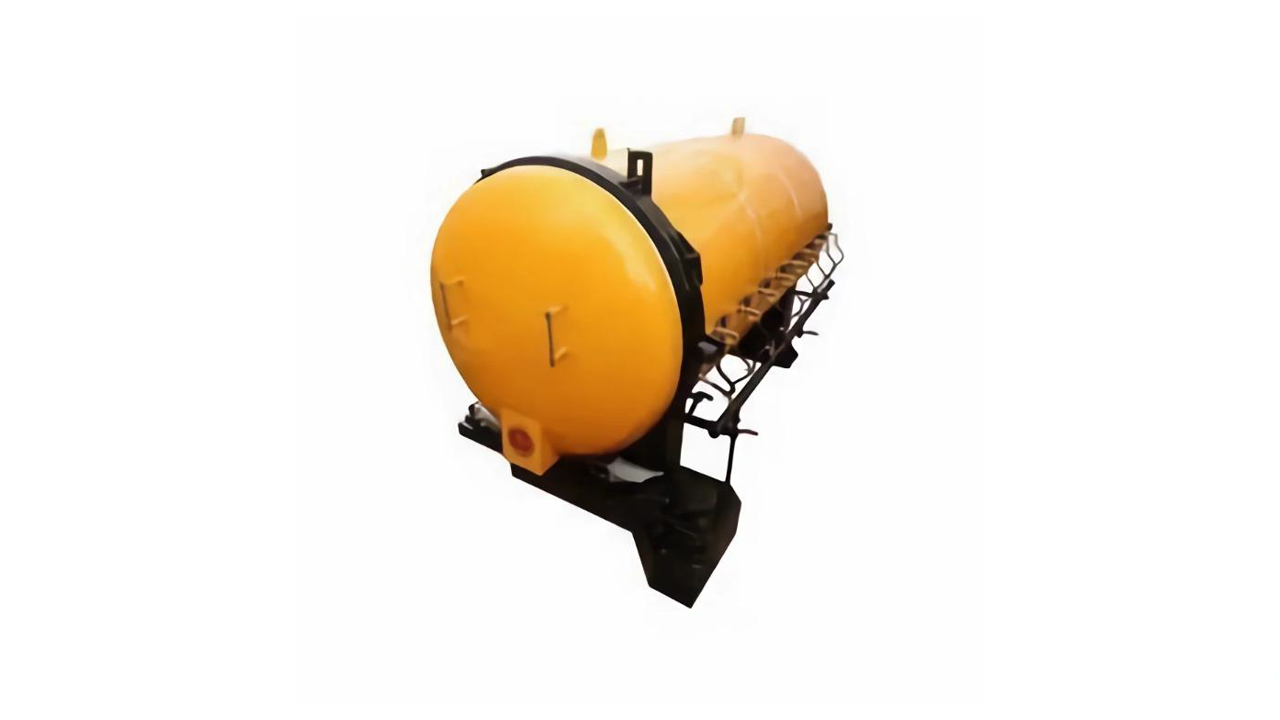
If you ask most people what makes a retread bond hold, they'll talk about the curing chamber, the cushion gum, or the buffing texture. Rarely does anyone mention the envelope — the rubber membrane that wraps the tire during cure. That's a mistake. In precure retreading, the envelope and the vacuum drawn inside it are doing quiet, continuous work that determines whether the tread bonds cleanly or fails months later.
What a curing envelope actually is
In the precure process, once a buffed casing has a pre-cured tread cemented to it with a layer of uncured cushion gum, the whole assembly is placed inside a rubber envelope — in most systems, a separate inner and outer envelope — before it goes into the autoclave. Retreading-apparatus patent literature (U.S. Patent 6,261,409, "Inner Curing Envelope for Use in Retreading Tires"; U.S. Patent 5,007,978, "Apparatus for Tire Retreading") describes the tire as encased within these separate inner and outer envelopes, with a vacuum then drawn between the envelopes and the tire itself.
That vacuum step is doing something specific: it stretches the envelope material into tight, complete contact with every surface of the tread and casing — no gaps, no air pockets, no loose spots. The tire then goes into the autoclave, where heat and pressure over several hours vulcanize the cushion gum and permanently bond the new tread to the casing, per general precure process descriptions corroborated by trade coverage comparing mold-cure and precure methods (AcuTread, "Mold Cure & Precure Retreading Processes Compared").
Why the vacuum matters more than it looks like it should
The vacuum isn't just there to hold the envelope in place. According to the same patent documentation, its real job is preventing air or steam from reaching the cushion gum during the cure. If air gets trapped between the envelope and the tire, it forms pockets that stop the cushion gum from curing properly in that spot — and that shows up later as tread distortion or, worse, a bond that separates in service. A related patent on curing envelope manufacture (European Patent EP0458436A2) describes the same functional requirement from the manufacturing side: the envelope has to seal completely enough to keep air and steam out of contact with the cement and uncured cushion stock throughout the cure.
In other words, a curing envelope with a compromised seal — a pinhole, a worn spot, a bad fit against an unusual casing profile — doesn't just risk a cosmetic defect. It risks an incomplete cure exactly where the tread meets the casing, which is the one bond a retread absolutely cannot afford to get wrong. This is why envelope condition belongs in the same conversation as casing inspection and the safety data covered in our retread safety guide — a failure here is a process failure, not a casing failure, but it produces the same outcome: a retread that doesn't hold.
Inner vs. outer: different jobs, same standard
The two envelopes aren't redundant — each does a distinct part of the job.
The inner envelope
The inner curing envelope sits against the tire's interior. Per U.S. Patent 6,261,409, it eliminates the need for a curing tube or separate inflation during cure, protects the tire's inner liner throughout the process, and helps prevent tread separation caused by a faulty inner liner. The same patent credits a well-fitted inner envelope with improving patch adhesion on repaired casings and delivering more consistent heat transfer through the tire wall — which means a more uniform cure across the whole tread, not just at the edges.
The outer envelope
The outer curing envelope wraps the tread and exterior. Patent literature on outer-envelope design (U.S. Patent 7,114,935, "Curing Envelope for and Method of Retreading Tires") describes its dual role: acting as the protective barrier that keeps air and steam away from the cement and uncured cushion stock, and compressing the tread, cushion gum, and casing into tight, uniform engagement with each other during the cure. Where the inner envelope is mostly about heat and liner protection, the outer envelope is mostly about pressure — making sure the tread is clamped evenly against the casing for the full cure cycle, not just at the center of the tread where pressure is easiest to apply.
What this means for your shop
Envelopes are a wear item, not a permanent fixture — they stretch, they take heat cycle after heat cycle, and eventually they stop holding a clean vacuum seal. Treating them as a commodity consumable to reorder only when one visibly fails is how shops end up chasing intermittent bond problems they can't otherwise explain. A shop running a tight precure process checks envelope condition as routinely as it checks buffing texture, because the two failure modes look similar downstream — tread separation — but start in completely different places.
If you're speccing a new line or replacing worn envelopes, this pairs with our pre-cure vs. mold-cure process guide and our curing chamber comparison for the rest of the cure-stage equipment.
RELATED GUIDES
Need inner or outer curing envelopes?
We stock inner and outer curing envelopes sized to common commercial casings, with transparent all-in Canadian pricing and delivery from our Ontario warehouse. Tell us your tire sizes and we'll confirm fit and lead time.
Get a curing envelope quote →Ask About Curing Envelopes
Send us your requirements and we'll get back to you within 24 hours with pricing and lead times — no obligation.