Home / Blog / How Tire Casing Credits Work
FLEET STRATEGYHow Tire Casing Credits Work — And What Changes When You Retread In-House
Every fleet that uses an outside retreader eventually meets the "casing credit" line on an invoice. Here's what that number actually represents, who sets it, and why it disappears entirely when you run your own line.
Published September 13, 2026 · Good Hope Retreaders
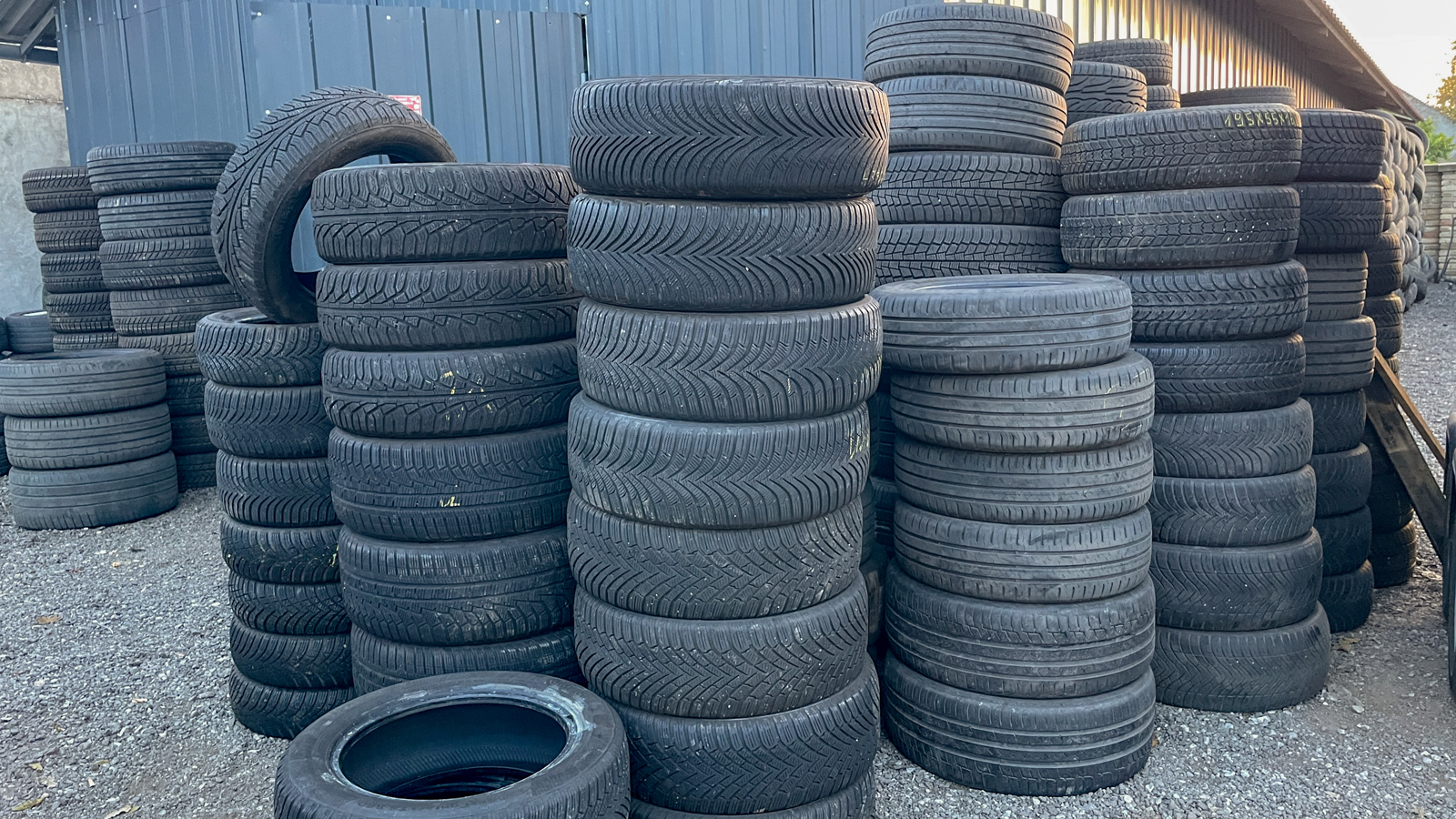
Most fleets that route their tires through an outside retreader never get a cash number for a worn casing. Instead they get a line item: a "casing credit," subtracted from what the retreader would otherwise charge. It's a familiar shape to anyone who's ever paid a core charge on a battery, an alternator, or a brake caliper — the old unit has residual value, so it's traded in against the price of the new or reconditioned one rather than simply discarded. Trade coverage of the tire aftermarket describes tire casings the same way: refurbishable cores with real market value, tracked the same way any other core would be, even though most vendors don't formally levy a charge if you decline to return one (Fullbay, "Everything You Need To Know About Part Cores").
The mechanism gets glossed over a lot, because the two adjacent facts — retreading is cheaper than buying new, and a good casing can be retreaded multiple times — get all the attention. This piece is about the transaction itself: how a casing credit is actually calculated, what typical ranges look like, and how it nets against what a fleet pays. Then the structural point: a fleet running its own retread line isn't a party to that transaction at all.
What a casing credit actually is
A casing credit is the fair market value a retreader assigns to a worn casing when a fleet trades it in, applied against the cost of the retread or replacement tire the fleet is buying (FleetEquipment, "Tire casings that live another day"; CarrierNet, "Understanding the Value of Your Tires & Casings"). It shows up in two related but distinct forms in practice:
- Your own casing comes back to you. You send a specific worn casing to the retreader, it's retreaded, and that same tire returns to your yard. Here the "credit" is implicit — you're only being billed for the retreading service (inspection, buffing, tread, cure), not a full tire, because you already own the core value. This depends on your specific casing surviving inspection and on being able to wait out the retreader's turnaround.
- Casing exchange. Some retreaders and truck-stop chains run exchange programs precisely so a fleet doesn't have to wait: you get an already-retreaded casing off the shelf immediately, warrantied for the life of the retread, and your worn casing goes into the retreader's own inventory pool to be graded and credited on its own terms (industry coverage of retail exchange programs describes this model explicitly). Here the credit is explicit — it's subtracted from the invoice for the exchange unit, the same way a core charge is refunded when an old part comes back.
Either way, the retreader — not the fleet — is the one grading the casing and setting the number that nets against the bill.
What sets a casing's credit value
Trade press covering casing credits is consistent on the inputs: casing value is typically determined by tire brand, the number of prior retreads or repairs, the casing's general condition, and current availability/demand for that size (FleetEquipment; CarrierNet; Heavy Duty Trucking / truckinginfo.com, "Tire Casing Cost Recovery").
- Brand tier. CarrierNet describes a "Grade A" tier built around a handful of major manufacturers, a second tier of their secondary brands, and casings outside those parameters that may not qualify for a credit at all, or that get capped in value once the original tread is used up.
- Retread and repair history. A casing already retreaded once or twice, or carrying prior repairs, is worth less than a virgin casing — it has fewer retread cycles of life left to sell.
- Condition. Sidewall damage, weathering, and any structural flaw found at inspection reduce or zero out the credit.
- Age and prior retread count. CarrierNet notes credits are generally not issued on tires 5+ years old and/or already recapped — though the exact cutoff varies by dealer.
- Size and demand. Even a sound casing in a low-demand size can fetch less, because the retreader is pricing against what it can resell or reuse, not just the casing's physical condition.
Every one of those inputs is set by the retreader's own grading standard and its own read of current market conditions — not by anything the fleet controls at the moment of trade-in.
Typical credit ranges — and how they net against the bill
Reported ranges vary by source and by market conditions at the time, which is itself consistent with a value that's graded case by case rather than fixed. CarrierNet cites credits in roughly the $25–$100 range for casings that qualify, against a disposal cost of roughly $12–$15 for a casing that doesn't — a swing worth several multiples either way depending on which side of the line a given casing falls. Heavy Duty Trucking's "Tire Casing Cost Recovery" cites a high-demand, name-brand casing with no repairs and no prior retread fetching as much as $95 in a healthy market. Other trade coverage places a wider band — roughly $10–$25 for a lower-tier or off-brand casing up against $60–$100 for a well-kept premium one — underscoring how much brand tier and condition move the number.
That net-against-the-bill mechanic is exactly where fleet tire controllers are told to pay attention. Trade press is split on strategy: some tire makers' fleet programs use casing credits to lower near-term tire program costs, while other industry voices argue fleets give up more long-run value by cashing out a casing early than they'd realize by retreading it themselves through its full remaining life (FleetEquipment). Either way, the credit is a one-time number set at a single point in time — it's not the same thing as the value of every retread cycle that casing could still deliver.
The dollars at stake are real, not theoretical. Heavy Duty Trucking's reporting on Quality Carriers — a fleet that overhauled its tire and casing management and cut its casing failure rate from roughly 30% to under 1% — describes the carrier recovering about $500,000 in casing credits alongside roughly $700,000 in separate tire-cost savings over a period of disciplined tracking, achieved by handing casing management to a dedicated third-party program. That's a genuine, sourced example of how much is riding on the casing side of a tire budget — and notably, it took a formal outside management program layered on top of an external retreader relationship to capture it consistently.
What changes when the transaction disappears
None of the mechanics above are a criticism of any particular retreader or network — a casing credit is a reasonable, standard way to price a used core when ownership of that core is genuinely changing hands, or when a fleet needs an immediate exchange unit instead of waiting on its own casing's turnaround. The point is narrower: it's a transaction, and every transaction has a party setting the price on the other side of the table.
A fleet running its own retread line removes that party from the loop entirely, for any casing that never leaves the yard. There's no brand-tier grading applied by someone else's policy, no size/demand pricing set by another company's current inventory position, no 5-year or already-recapped cutoff imposed from outside, and no one-time credit standing in for a casing's full remaining retread life. The casing simply goes from service, to inspection, to the buffer, to the tread builder, to the cure, and back onto a wheel — the same physical asset, still owned by the fleet, on its way to whatever retread cycles it has left in it. There's no invoice line to negotiate, because there's no exchange happening.
That's a different claim from the one made in our piece on casing ownership and total value across retread lives, which is about how many cycles a casing can deliver and who tracks that history. It's also distinct from the franchise lock-in argument, which is about scheduling and pricing pace. This is specifically about the trade-in mechanism itself — the fact that, outside a fleet's own operation, a casing's worth gets converted into a single credited number by somebody else's grading criteria, at a single point in time, instead of being captured directly by the fleet across however many retreads that casing has left.
This isn't a claim that any specific branded retread program undervalues casings or behaves anticompetitively — casing credit programs exist because they solve a real problem (immediate exchange, simplified accounting, no need to track every casing's return trip). It's a structural observation about single-supplier dependency for a repeatable, high-volume input: below a certain casing volume, trading in for a credit each cycle is often the more practical choice, and that's a reasonable trade-off. Above that volume, the math for keeping the asset and running the process yourself changes.
RELATED GUIDES
Where Good Hope fits
We're a manufacturer-direct supplier of retread machinery, consumables, components, and repair tools, with local Ontario service and transparent all-in Canadian pricing — not a retread franchise and not an operator running a shop on your behalf. If your casing volume is high enough that trading casings away each cycle is starting to look like the more expensive option, we help fleets spec and equip the line — including the casing inspection equipment that determines condition, which is the same input a retreader's own grading process weighs before it sets a credit. Our inspection spreader is built for exactly that step. The decision to run your own line is yours; our job is making sure the equipment behind it is right and stays supplied.
Thinking about capturing casing value yourself?
Tell us your fleet's tire sizes and casing volume and we'll help you work out whether keeping that asset in-house pays off at your scale — with transparent, all-in Canadian pricing on the equipment to run it.
Talk to us about your casing volume →Tell Us About Your Casing Program
Send us your requirements and we'll get back to you within 24 hours with pricing and lead times — no obligation.