Home / Blog / Buffing Dust & Combustible Hazard
SHOP SAFETYBuffing Dust: Why OSHA and NFPA Treat It as a Combustible Hazard, Not Just Housekeeping
Reclaimed tire-tread rubber dust from buffing is named directly in OSHA's combustible-dust guidance. What the standards actually require, and how a shop's dust collection fits into meeting them.
Published September 4, 2026 · Good Hope Retreaders
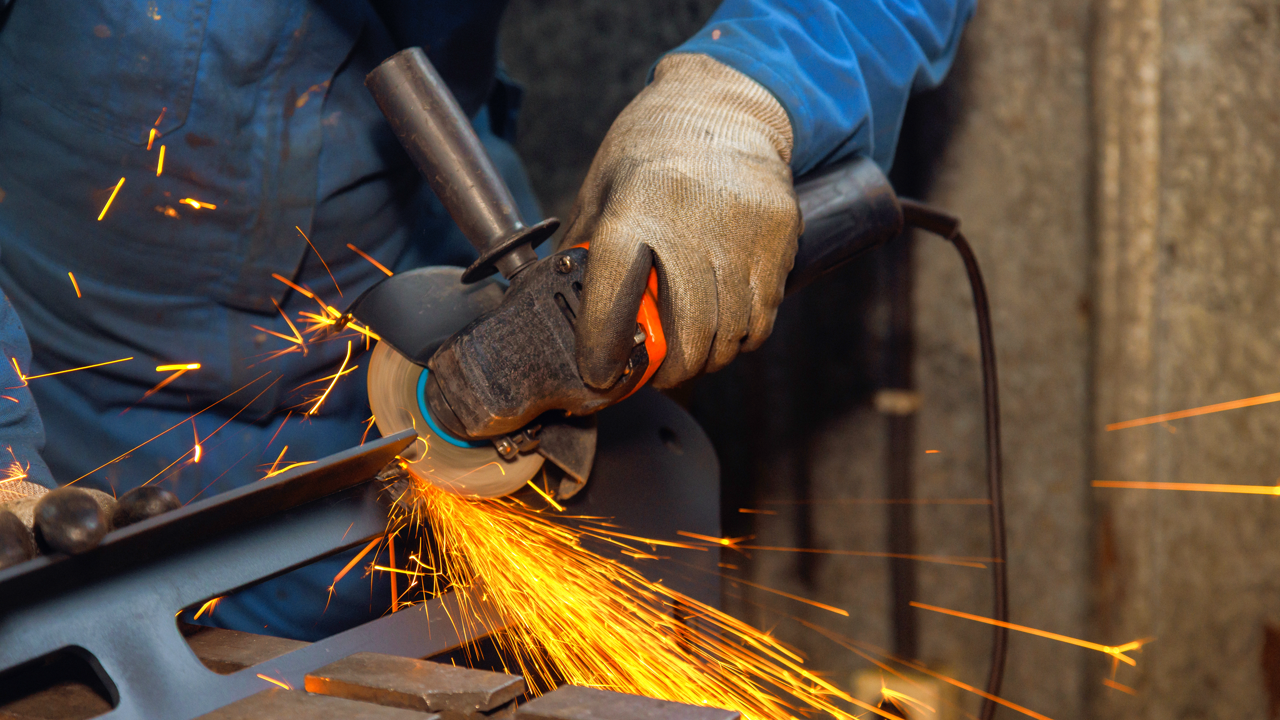
Every buffed casing throws off fine rubber crumb — it's the unavoidable byproduct of texturing a tire for a new tread to bond to. Most shops treat what comes off the buffer as a cleanup problem: sweep it up, bag it, move on. Regulators don't file it under housekeeping. The U.S. Occupational Safety and Health Administration names "reclaimed tire tread rubber (rubber dust) from buffing the tread area of a worn tire" directly, by that description, in its own combustible-dust guidance — as one of the specific dust sources its enforcement program watches for.
What OSHA actually says about buffing dust
OSHA's Safety and Health Information Bulletin "Combustible Dust in Industry: Preventing and Mitigating the Effects of Fire and Explosions" (SHIB 07-31-2005, updated 2014) is the agency's core guidance document on the hazard, and it lists rubber-reclaiming and tire-buffing operations among the industries and processes that generate combustible dust. It sits alongside wood, food, metal, and plastics dust as a named example — not a hypothetical.
OSHA backs that guidance with an active enforcement posture: its Combustible Dust National Emphasis Program (most recently reissued as Directive CPL 03-00-008) directs compliance officers to inspect facilities that generate or handle combustible dust capable of creating a fire or explosion hazard when suspended in air, across the general industries the program covers.
The standard shops are actually held to: NFPA 654
Where OSHA doesn't have a dust-specific regulation for a given industry, it enforces combustible-dust hazards under the General Duty Clause — and it points to NFPA 654, the Standard for the Prevention of Fire and Dust Explosions from the Manufacturing, Processing, and Handling of Combustible Particulate Solids, as the recognized industry standard for what "reasonably foreseeable and controllable" looks like in practice. NFPA 654 is the framework that sits behind terms like dust hazard analysis (DHA), housekeeping accumulation limits, and engineering controls at the point of dust generation.
One detail from that standard's world is easy to miss: a meaningful share of combustible-dust explosions happen inside the dust collector itself, not out on the shop floor — which is why collectors serving a combustible dust stream are built (or retrofitted) with explosion relief venting, suppression, or isolation, not treated as a plain shop-vac.
Why buffing dust specifically behaves this way
Combustible-dust risk is a function of particle size and how the dust is handled, not the parent material's bulk flammability — a solid rubber tire isn't a fire hazard sitting on a rack, but the same rubber reduced to fine crumb and allowed to become airborne or to accumulate in layers is a different material, physically. That's true of grain, sugar, and aluminum too; it's why the hazard shows up in OSHA's cross-industry bulletin rather than a tire-specific one. A rasp or buffer running continuously through a shift is, mechanically, a dust generator, and the buffing station is where the controls have to start.
What this means day to day in a retread shop
- Capture dust at the source. A hood or shroud at the buffer feeding a dedicated collector keeps rubber crumb from ever becoming airborne shop dust or settling on overhead surfaces, ledges, and light fixtures — the accumulation NFPA 654 is most concerned with.
- Don't let the collector become the hazard. High-efficiency cyclone separation drops the coarse fraction out mechanically before it reaches a filter stage, which reduces the fine-dust loading the filter and downstream ductwork have to handle.
- Housekeeping still matters. Layered dust on horizontal surfaces near the buffing station — beams, ledges, the tops of enclosures — is exactly the accumulation pattern combustible-dust guidance calls out; regular cleanup isn't optional even with good source capture.
- Basic air quality, separately. Independent of the fire/explosion question, keeping buffing dust out of the general shop atmosphere is ordinary industrial hygiene — it's what keeps a buffing station from fogging the air a technician works in all day.
None of this substitutes for a shop's own dust hazard analysis under NFPA 654, sized to its specific buffing volume and layout — that's a compliance step a shop works through with its own safety resources, not something a piece of equipment guarantees on its own. But source capture at the buffer is the first, most basic control, and it's the one most easily retrofitted into an existing line.
RELATED GUIDES
Setting up or upgrading dust collection?
We supply a cyclone dust collector built to capture buffing dust at the station, with transparent all-in Canadian pricing and delivery from our Ontario warehouse. Tell us your buffing setup and we'll spec the right unit.
Get a dust collector quote →Ask About Dust Collection
Send us your requirements and we'll get back to you within 24 hours with pricing and lead times — no obligation.