Home / Blog / Where Do Scrap Tires Actually Go?
SUSTAINABILITY DATAWhere Do Scrap Tires Actually Go? The Numbers Behind the Retread Case
264 million scrap tires a year, 79% kept out of landfills — the industry's own end-of-life tire data, and why retreading is different from every other market on that list.
Published September 2, 2026 · Good Hope Retreaders
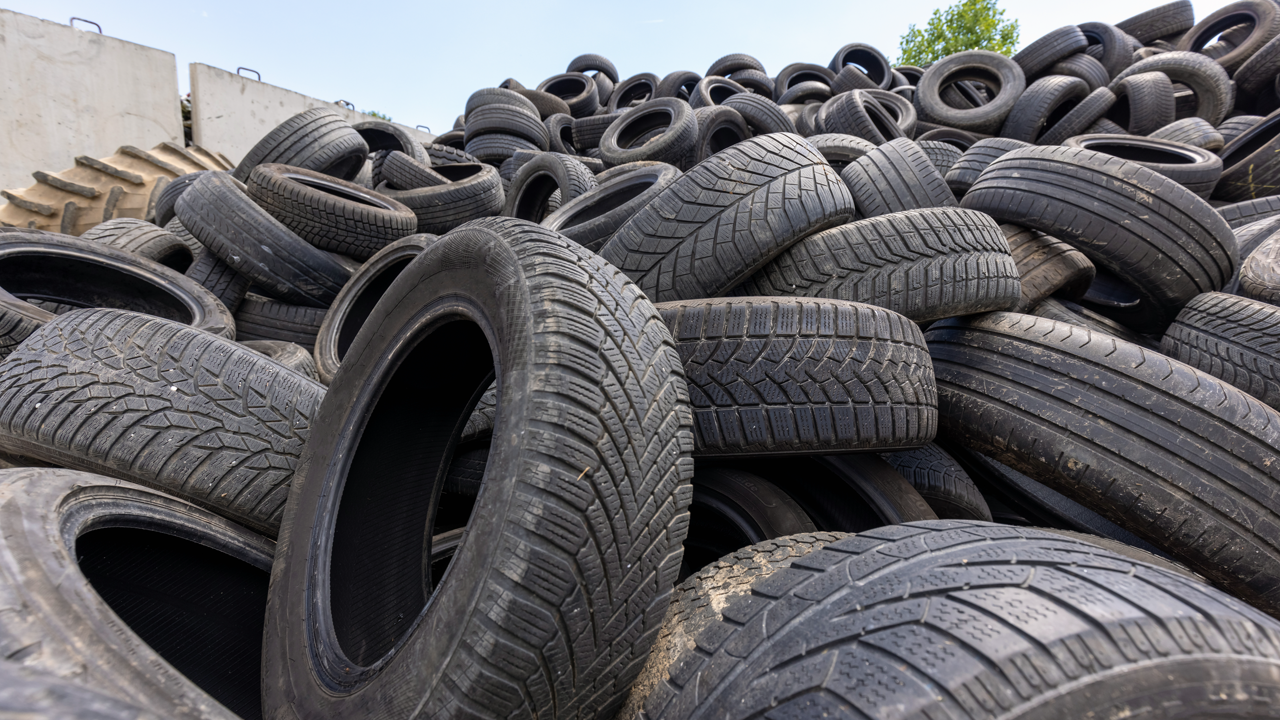
Retreading's environmental pitch is usually a single line: no new casing gets manufactured. That's true, but it undersells the point. The U.S. Tire Manufacturers Association (USTMA) tracks exactly what happens to tires once they reach the end of their road life, and its own numbers show a system that's improving — but still sending a real share of tires to landfill every year. Retreading doesn't just avoid making a new casing; it's the one intervention that keeps a tire out of that entire accounting exercise in the first place.
The scale: 264 million tires a year
USTMA's 16th End-of-Life Tire (ELT) Management Report, released in October 2024 covering 2023 data, put U.S. scrap tire generation at approximately 264 million tires that year. Every one of those tires has to go somewhere — landfill, a recycling/reuse market, or export.
The progress: 79% found a market outside landfill in 2023
The good news in USTMA's report: 79% of end-of-life tires found markets outside of landfills in 2023, up sharply from 71% in 2021. Tire-derived fuel (TDF) — burned by cement kilns, pulp and paper mills, and utility boilers — remains the single largest of those markets, accounting for roughly a third of ELT volume, with TDF consumption up about 11% between 2021 and 2023.
The number worth sitting with is the other side of that 79%: roughly one in five scrap tires generated in the U.S. in 2023 still didn't find a recycling or reuse market at all.
Why retreading isn't just another market on that list
Every market USTMA tracks — TDF, ground rubber, civil engineering fill, export — is a destination for a tire after it has already become an end-of-life tire. Retreading works upstream of that entire system: it keeps an existing casing earning miles instead of entering the ELT stream at all.
That matters more than it might sound, because a single casing rarely gets just one retread. Industry reporting on commercial fleet experience puts long-haul casings good for roughly 2-3 retread cycles, with regional and local-service fleets commonly getting 5 or more cycles out of a well-maintained casing, and severe-service fleets — sanitation and other urban-vocational applications — sometimes reaching 6 or 7. Every one of those cycles is a tire that didn't need a TDF market, a ground-rubber buyer, or landfill space that year, because it never left revenue service to become a scrap tire in the first place.
What this means in practice
- The circular-economy case for retreading has a hard denominator now. It's not just "greener" in the abstract — every extra retread cycle is one fewer tire competing for a finite set of ELT markets that, per USTMA's own numbers, still aren't keeping pace with everything that's generated.
- Casing management is the lever. The fleets and shops getting the most retread cycles per casing — through careful inspection, correct buffing, and proper cure — are the ones actually moving that 79% figure in the right direction, one casing at a time.
- This is a national average, not a guarantee. Whether a given casing gets 2 cycles or 6 depends heavily on duty cycle, maintenance, and how it's handled through the retread process — not on the fact that retreading exists as an option.
This pairs with our look at why more fleets are switching to retreads and what a casing is actually worth over multiple retread cycles.
RELATED GUIDES
Getting more cycles out of every casing?
We supply the machinery, consumables, and repair tools that make consistent, well-executed retreads possible — with transparent all-in Canadian pricing and delivery from our Ontario warehouse. Tell us about your line and we'll help you spec it.
Get a quote →Tell Us What Your Shop Needs
Send us your requirements and we'll get back to you within 24 hours with pricing and lead times — no obligation.