Home / Blog / Retreads on the Steer Axle
COMPLIANCE GUIDERetreads on the Steer Axle: Why Canada's Rule Is Stricter Than the US's
Canada's National Safety Code bans retreads on any steering axle. US federal rules only restrict buses. What the actual regulations say, and what the gap means for a fleet running both sides of the border.
Published September 4, 2026 · Good Hope Retreaders
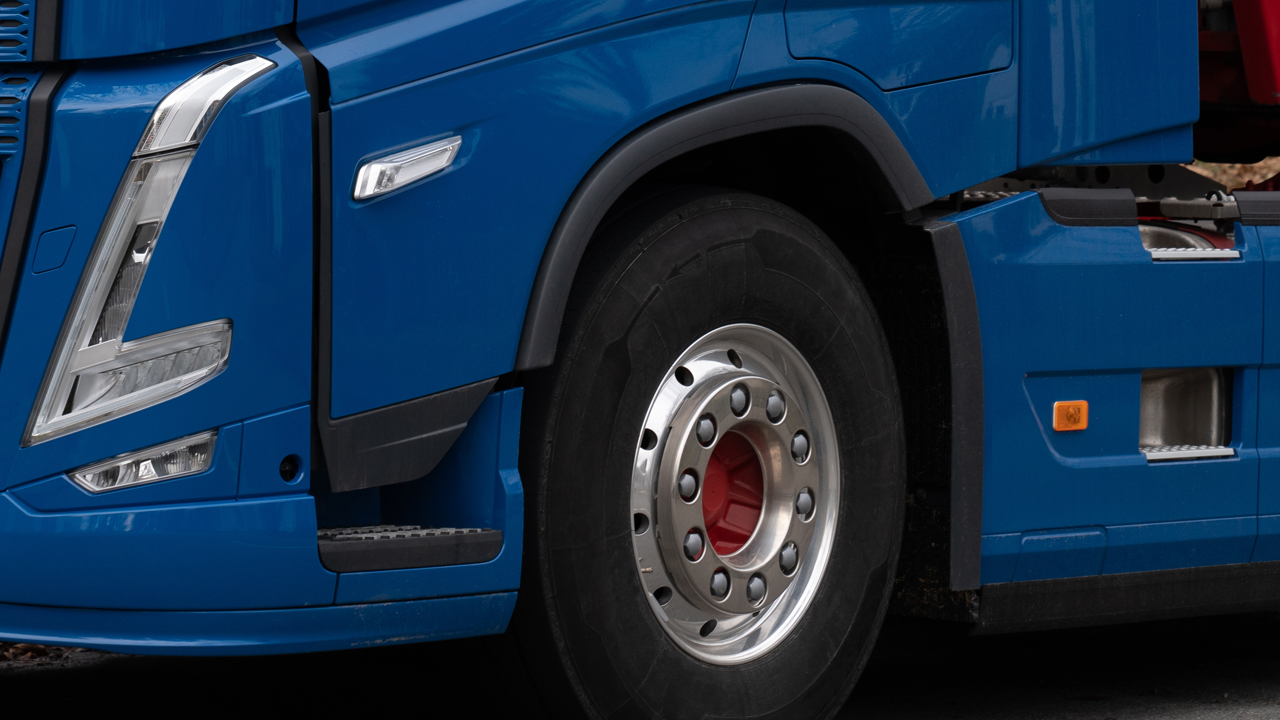
"No retreads on the steer axle" gets repeated often enough in the industry that it's easy to assume it's one rule, everywhere. It isn't. For a shop or fleet working across the Ontario–Michigan border — the kind of traffic that passes through Windsor every day — the actual rule depends on which side of the line the truck is registered and inspected under, and the two regimes aren't the same.
Canada: no retreads on any steering axle, period
Canada's commercial vehicle inspection rules are set through the National Safety Code (NSC), a harmonized set of standards developed by the Canadian Council of Motor Transport Administrators (CCMTA) and adopted by the provinces, including Ontario. NSC Standard 11 — Maintenance and Periodic Inspection states plainly that no retreaded tire shall be installed and operated on an active steering axle. That's a blanket rule: it applies to trucks and tractors generally, not just buses, and it applies regardless of how sound the casing or how reputable the retreader.
The same standard also addresses the tire itself once it's in the retread-eligible positions: no retreaded tire may have material loose, missing, or separated at the bond between the new tread and the casing — a defect that would fail inspection on any axle, not just steer.
The US: only buses are restricted federally
The equivalent US federal rule, the Federal Motor Carrier Safety Regulations at 49 CFR § 393.75, draws the line in a different place. Section 393.75(d) prohibits regrooved, recapped, or retreaded tires on the front wheels of a bus — full stop. But for trucks and truck tractors, the federal prohibition is narrower: 393.75(e) restricts regrooved tires with a load rating of 4,920 lbs or more on front wheels, a separate category from retreaded/recapped tires generally. Read together, a US-registered truck or tractor is not federally barred from running a retread on the steer axle the way a bus is, or the way any vehicle is under Canada's NSC-11.
That legal allowance is why the topic keeps coming up in US trade press as a live debate rather than a settled question — pieces asking "should retreads be used as steer tires?" wouldn't exist if the answer were a flat no. In practice, many US fleets choose new tires for steer position anyway, as a matter of internal policy or insurer preference, not because the law requires it.
What roadside inspection actually checks
Day to day, most commercial vehicle inspections on both sides of the border are conducted to Commercial Vehicle Safety Alliance (CVSA) out-of-service criteria. On tread depth specifically, CVSA's threshold is stricter for the steer position than any other: a minimum of 4/32" on steer tires versus 2/32" elsewhere, and a vehicle is placed out of service if a steer tire measures below 2/32" in two adjacent tread grooves. That tread-depth rule applies regardless of whether the tire is new or retreaded — it's a separate, independent check from the retread-on-steer question.
| Rule | Canada (NSC-11) | US (49 CFR 393.75) |
|---|---|---|
| Retread on truck/tractor steer axle | Prohibited, all vehicles | Not federally prohibited |
| Retread on bus front axle | Prohibited | Prohibited (393.75(d)) |
| Min. steer tread depth (CVSA) | 4/32" | 4/32" |
| Min. non-steer tread depth (CVSA) | 2/32" | 2/32" |
What this means for a fleet or shop near the border
For a Canadian-plated vehicle, the answer is simple and non-negotiable: NSC-11 applies regardless of what a US counterpart running the same route is permitted to do. There's no "the truck is legal in Michigan" defense at an Ontario roadside inspection. For a mixed or cross-border fleet, the practical response most shops land on is the same one many US fleets already choose voluntarily — reserve retreads for drive and trailer positions, run new tires on steer, and apply that as a single fleet-wide policy rather than tracking which rule applies to which unit on which side of the tunnel.
That policy also happens to be where retreading's economics are strongest anyway — drive and trailer positions carry the bulk of a fleet's tire spend and see less of the directional/steering load that makes steer casings a different inspection case. None of this changes the case for retreading generally: it changes where in the axle configuration it applies.
RELATED GUIDES
Equipping a compliant retread program
We supply the machinery, consumables, components, and repair tools an Ontario shop needs to run drive- and trailer-position retreading in-house, with transparent all-in Canadian pricing and delivery from our Windsor warehouse.
Talk to us about your setup →Ask About Your Retread Line
Send us your requirements and we'll get back to you within 24 hours with pricing and lead times — no obligation.